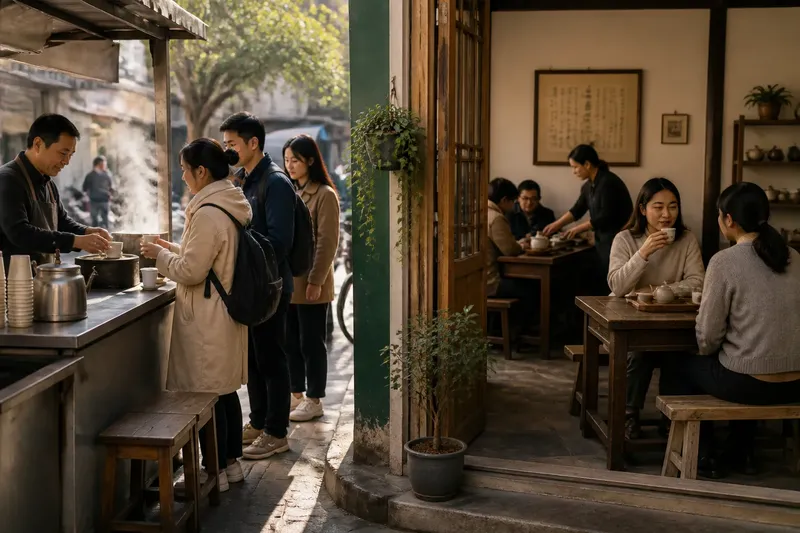
A Rainy Weekend Gallery Visit, Planned Around One Room
Plan a rainy weekend gallery visit around one room, a restful pause and a handful of details, so the outing feels complete without rushing every gallery.
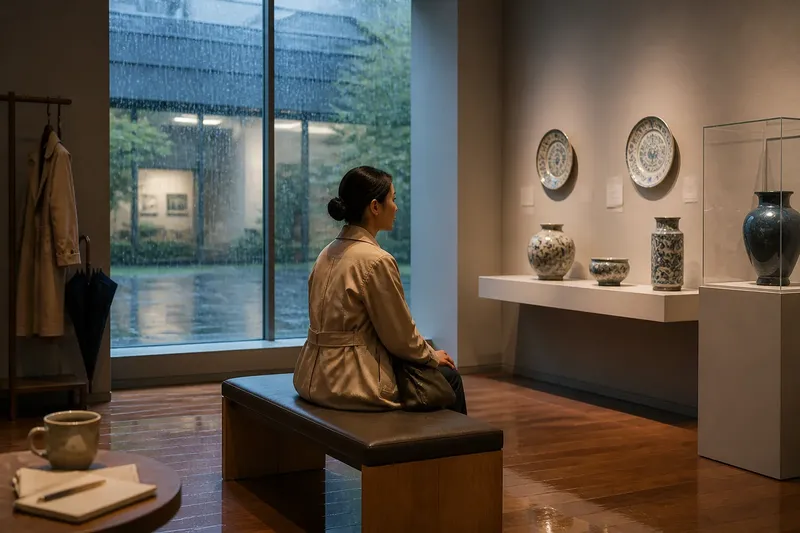
A rainy weekend gallery visit can feel complete without covering every floor. Choose one room as your destination, leave space for a comfortable pause, and let a few visible details set the pace. In a city gallery, the pleasure may be as simple as watching damp coats steam gently in the lobby, then settling with a painting while rain threads down the windows.
Choose the room before you leave
Start with the gallery map, current exhibition page or a printed visitor guide. Look for a room that gives you a clear reason to go: a cluster of landscape paintings, a ceramics display, a room of textiles, or a view across the building’s courtyard. Pick one anchor, not a whole wing. If the online information is sparse, choose a room near a bench or a window so you have an easy place to pause.
Check opening times, ticket arrangements and any notices about closed galleries. The room you have in mind may be temporarily unavailable, so keep a nearby alternative in reserve. A compact plan is easier to adjust than a route that depends on seeing a particular work.
Say you are visiting a city museum on a wet Saturday and its map shows a ceramics room beside a quiet seating area. You decide to spend the visit there, with a nearby gallery as a fallback. If the ceramics room is open, you can settle in; if not, the alternative still keeps the outing focused.
Let the weather shape your arrival
Rain changes the small logistics of a visit. Take a compact umbrella if the venue permits one, and use the cloakroom for a dripping coat or larger umbrella where available. A dry cloth for spectacles can be more useful than an elaborate bag of supplies. Keep your ticket and phone somewhere easy to reach rather than rummaging at the entrance.
On arrival, give yourself a few minutes in the foyer. Check the day’s room notices, find the toilets and water point, and see where the nearest seating is. This brief orientation keeps you from having to break concentration later simply to solve a practical problem.
Make the room a small field of attention
Once inside, resist the impulse to scan every label. Choose a work, object or section that draws your eye, then notice what is actually there: the direction of a figure’s gaze, a repeated border on a bowl, a change in glaze, or the way a fabric catches light. Read the label after looking for a moment. It can add context without dictating what you must notice.
Try moving between three kinds of detail: one close, one across the room and one connected to the space itself. A close detail might be a brush mark or a seam; a distant one could be the arrangement of objects along a wall; the room’s own feature might be a high window or a reflection on the floor. This gives your attention a simple rhythm while leaving room for surprise.
If photography is allowed, check the gallery’s rules before taking a picture. A quick note in your phone can be less distracting: write down a colour, a material and a question you want to remember. The point is not to produce a record of the entire room, but to leave with one precise impression.
Where can you pause and what should you notice?
Where is the best place to sit?
Look for a bench outside the main flow of visitors, ideally with a view of the room rather than a doorway. If seats are occupied, step into the foyer or a designated rest area instead of lingering where others need to pass.
How long should you stay in one room?
Stay until your attention begins to wander, not until you have inspected every label. A room can hold a satisfying visit through one focused look, a short pause and a second look at the detail that stayed with you.
What should you bring on a rainy day?
Keep it light: a ticket, a compact umbrella if allowed, and a small bag for essentials. Venue rules differ, so check them before packing food, drinks or anything that may need to be stored.
What if the room is crowded?
Give the busiest work a little space and begin with a quieter object or label nearby. You can return when the group moves on, or use the crowd as a cue to pause in the next room and come back later.
Take a pause that belongs to the visit
A pause need not mean leaving the building. Use a bench, a sheltered courtyard or the gallery café, if there is one, to let your eyes rest from looking closely. A warm drink can suit a rainy afternoon, but it is not essential; the useful part is changing posture and pace before returning to the room.
Keep the pause modest and purposeful. Rather than checking every message, ask yourself what you would like to look at again. Perhaps it is a pair of objects that seemed related, or a patch of colour you noticed only from the doorway. That question gives the return journey a gentle direction.
Leave with one detail, not a tally
Before leaving, take one final look from a different spot if the room allows it. Notice whether the work you chose looks different at a distance, or whether the room’s arrangement has become clearer. Then write a short note or simply carry the detail with you. A remembered curve, colour or texture can give the rainy walk back to the station a quiet thread.
For a rainy weekend gallery visit, the room is not a box to tick; it is a place to spend time attentively. Check the gallery’s current access and visitor guidance, then let the weather slow the transitions between looking, sitting and leaving. You may see fewer displays, but you can come away with a sharper sense of one room and the particular afternoon you spent in it.