Tea House or Tea Stall: Two Different Shapes of a Pause
Tea house or tea stall: learn how seating, service and street noise shape a brief tea break, and choose a setting that suits your time and mood.
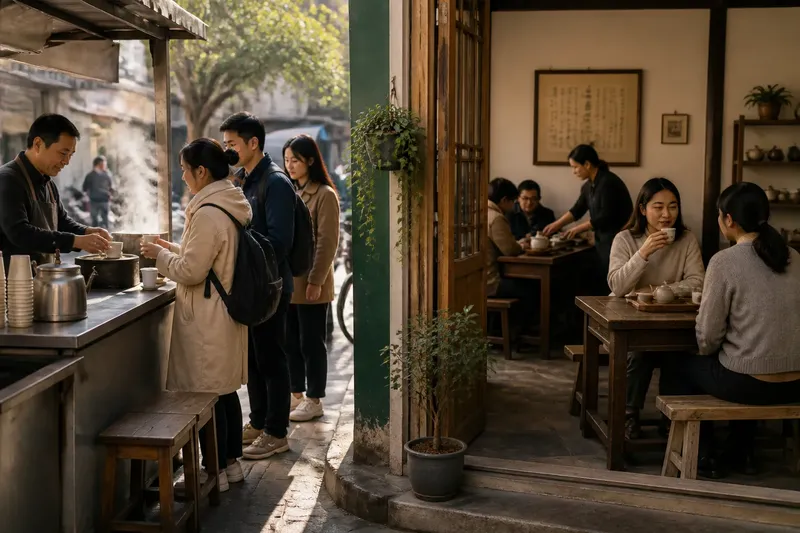
A tea house or tea stall can serve the same cup and create two quite different pauses. At a street-side stall, the kettle, counter and passing traffic keep the break close to the day’s movement; inside a tea house, a threshold, a seat and a slower rhythm can make time feel set apart. These are useful distinctions to notice across eastern Asia, though the details vary from neighbourhood to neighbourhood.
What does the setting ask you to do?
At a stall, the counter usually organises the encounter. You approach, order, wait near the preparation area, then decide whether to drink standing, perch nearby or carry the cup away. The exchange may be brief without feeling impersonal: a nod, a familiar order or a few words can be enough to mark a shared local routine.
A tea house places more emphasis on entering and settling. A doorway may lead to a room with low tables, benches or separate seating areas; a host or menu may guide the order. Once seated, you can stay with the cup rather than keeping one eye on the next person waiting at the counter.
Neither arrangement tells you exactly how long to remain. Instead, the space offers cues. A queue forming at a compact stall, cups collected quickly, or a busy pavement suggests that lingering may be awkward. In a tea house, an unhurried service rhythm and tables designed for sitting can make a longer pause feel ordinary.
How do pace and sound shape the break?
The stall’s pace is often shared with its surroundings. Steam rises beside bus engines, bicycle bells, conversation and the clink of cups. The drink becomes part of a short interruption in a route: a stop on the way to a shop, a station or a riverside walk. Even when you have no conversation, the street supplies movement to watch.
Inside a tea house, sound is more contained. It might be the pour from a pot, the scrape of a chair or overlapping talk at nearby tables. That quieter frame can make a brief visit feel more deliberate. It can also create a social setting for conversation, reading or watching the room rather than the street.
Listen before choosing. If you want to keep moving, a stall with a clear ordering point may fit. If you want to talk without raising your voice or rest your feet, look for a tea house with seating that is actually available. A calm-looking room may be full, while a lively stall may offer a perfectly comfortable place to pause.
What should you notice before ordering?
- Where people wait: If the queue forms at the counter, stand behind it; if it is unclear, pause to observe or ask rather than blocking the pavement or doorway.
- How cups are served: If cups are handed over for carrying, take yours away only when that seems permitted; if a pot is set out, settle at the table and follow the house’s serving cues.
- Whether seating is shared: If visitors share a stool or table, join only when there is clear room; if someone’s belongings or company mark a place as occupied, wait or choose another seat.
- How the menu is presented: If a board or handwritten card is beside the counter, order there; if a menu is brought to seated guests, wait for service or ask how ordering works.
- What happens after drinking: If there is a return tray, place used cups there; if no collection point is visible, leave the cup neatly and ask staff rather than guessing.
- How much room your group needs: If a narrow counter has space for one person, order one at a time or choose a larger setting; if a table has room for your group without crowding others, sit there.
These details are practical, but they also show how each place shares space. A stall may depend on quick turnover and a narrow strip of pavement; a tea house may organise the visit around a table and the time spent there. Watching the flow for a moment can help you take part without turning a small stop into a negotiation.
How can you choose a tea house or tea stall?
Which setting suits a short stop?
A stall is often the easier choice when you want a drink between errands or along a walking route. Look for a visible queue and a straightforward counter, then keep your order and departure simple if others are waiting.
Where can you sit and talk?
A tea house is more likely to offer a table and a little separation from street noise. Check that the seating is open to visitors, and choose a place that does not require you to occupy a large table alone during a busy spell.
Is takeaway tea the same kind of pause?
Takeaway turns either setting into a moving stop, but the stall often makes that transition especially direct. A tea house may still invite you to sit, so notice whether takeaway is offered and whether you are meant to order at the counter.
How do you know whether it is all right to linger?
Look at the room’s rhythm rather than assuming that a seat gives you unlimited time. If people are waiting, tables are being cleared quickly or staff signal that the space is closing, finish up and make room for the next visitor.
What changes when you arrive with someone else?
A solo visitor can often adapt to a stall’s small footprint: order, find an open edge and let the street carry the rest. With a companion, the same counter may work well if both people can stand clear of the queue. If one person orders while the other holds a place, do so only when the arrangement is obvious and does not obstruct anyone.
A tea house gives conversation a more settled base, but it also asks a group to consider table size and the room’s general quiet. A pair may fit neatly at a small table; a larger group may need to split up or choose a busier room where conversation blends naturally into the soundscape.
Say you and a friend are walking through a lively district and want a quick drink before continuing. If a stall has a short, orderly queue and a clear place to stand, you might order there and take the cups to a nearby public bench, keeping the counter free. If rain begins and the tea house around the corner has open shared seating, you might instead sit inside and let the pause stretch to match the weather.
What makes the pause feel local?
Notice the small routines without turning them into a performance. People may greet the vendor, place cups in a particular spot, share a table or take tea away without ceremony. These habits belong to the setting and its regular visitors; following a visible cue is often more considerate than asking for an elaborate explanation during a busy moment.
Tea itself can shape the pace. A cup meant to be carried encourages a pause that travels with you, while a pot and cups on a table make pouring and sharing part of the visit. The menu may include familiar tea styles, milk tea or other drinks, but the social frame matters as much as the contents: counter service keeps the exchange compact, while table service gives it more room.
When the right choice depends on a menu, house convention or local rule, follow the sign or ask the person serving. A simple, polite question is enough if you are unsure whether to order first, sit first or return a cup.
How can you leave without breaking the rhythm?
At a stall, carry your cup away only if the serving style allows it, and leave any shared stool or ledge ready for another visitor. At a tea house, check whether cups stay on the table or go to a return point; do not assume that a quiet room has no closing routine.
The useful distinction between a tea house and a tea stall is not that one is always restful while the other is always hurried. Rather, each gives your break a different shape. A stall tucks tea into the street’s current; a tea house gathers the pause around a room, a seat and perhaps a conversation. Notice the queue, the sound and the available space, then choose the setting that lets you stop without asking the place to become something it is not.