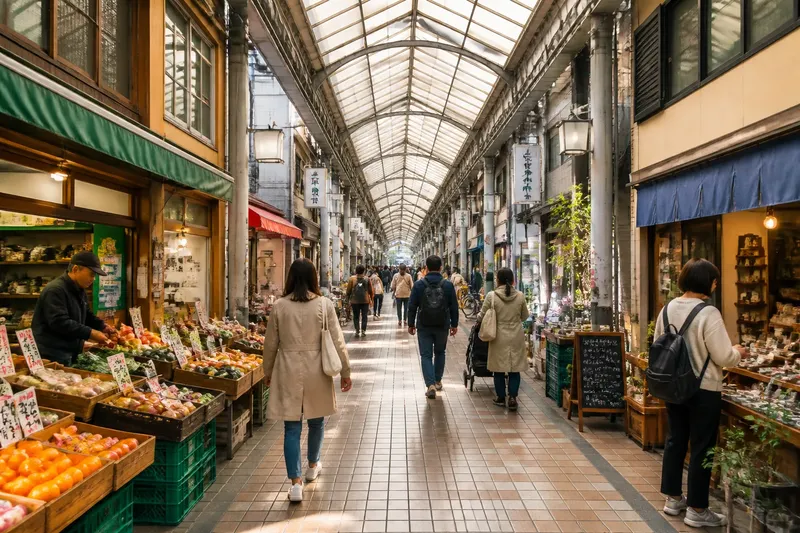
The Souvenir Trap: When a Keepsake Has No Place at Home
A souvenir can carry a vivid memory and still become clutter. Choose one by its story, scale and likely place, so it belongs in your home.
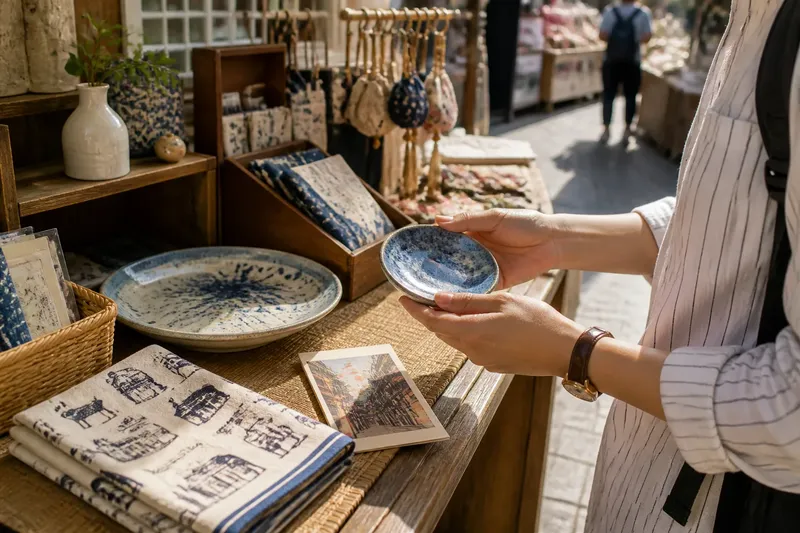
The souvenir trap begins when a memorable afternoon in eastern Asia ends with a purchase and no clear place to put it. Choosing a keepsake for its story, size and likely home can help you bring back something you will enjoy, rather than an object that settles in a drawer.
At a market stall, museum shop or station kiosk, the object is right in front of you while the home it must enter is far away. The point is not to stop bringing things back. It is to choose something that can live alongside ordinary life, without asking a shelf to preserve the whole feeling of a trip.
Why does a souvenir lose its meaning at home?
On a trip, an object arrives with a ready-made setting. A hand-painted cup may recall a rainy stop in Kyoto; a folded print may bring back a gallery in Taipei. At home, the setting changes. The cup competes with the mugs already in the cupboard, while the print needs a wall, a frame and a decision about where it belongs.
The memory attached to the object remains, but it may receive less attention once the object is out of sight, awkward to use or too large for its intended spot. It can then feel like an obligation rather than a pleasure. That is the trap: buying in the intensity of the moment and expecting the object to recreate it unaided.
A useful distinction is between souvenirs that serve a role and souvenirs that serve as reminders. A tea towel from a market can be put to work; a small piece of local craft might be displayed; a paper ticket or map can be kept with photographs. None is automatically better. The right choice depends on what you enjoy seeing or using once you are home.
What makes a keepsake’s story worth keeping?
A place name alone may not be enough. “Bought in Seoul” can fade into a vague travel label, especially if several objects carry the same message. A more particular story gives a keepsake a reason to stay: a stallholder’s explanation of a pattern, a material’s connection to a local craft, or the detail that made you stop and look.
You do not need a grand tale. Ask yourself what you would tell someone who noticed the object on a shelf. If the answer is a specific moment, choice or detail, you have a story you can recall without relying on a printed caption. If you can only say that the item seemed charming at the time, give yourself space to decide.
Say you are browsing a craft market in Busan and see a small ceramic dish with a blue glaze. Imagine you learn how the maker varies the finish and picture using the dish beside your keys at home. That detail and a real place for the object make it a stronger candidate than a larger decorative plate you admire but cannot imagine displaying.
How can you tell whether it will fit at home?
Scale is not just a question of dimensions. It is also a question of what the object asks from its surroundings. A poster needs a wall and perhaps a frame; a carved figure needs an uncluttered surface; a textile may need folding, hanging or careful storage. Even a small object can demand attention if it has no natural home.
Before buying, picture its destination in concrete terms: the shelf by the books, the kitchen drawer, the space above a desk. If the object needs a location you do not have, it may be attractive but poorly suited as a keepsake. For something fragile or awkward to carry, consider whether you would protect it on the journey and find a safe place for it later.
Materials also shape how an object fits into daily life. A paper print may be easy to store flat but need framing to display; a fabric item can fold away but might not suit your household’s use; a ceramic piece can be useful yet vulnerable to knocks. Read the item’s label and follow any care guidance from its maker, particularly for food-contact objects or delicate materials.
What should you ask before buying a souvenir?
Can I recall the story without a label?
Look for a detail you can describe in your own words, such as the making technique, motif or encounter that drew you to the object. If the memory depends on a tag, keep it or note the story with your travel photographs.
Where will it go when I get home?
Name a real spot or a genuine use rather than promising yourself you will “find somewhere”. If no plausible place comes to mind, leave it at the stall and keep the memory in a photograph or journal instead.
Does its size suit that place?
Consider the space the item occupies and what must move to accommodate it. A keepsake that fits an existing shelf, drawer or routine is less likely to become a new storage problem.
Would I choose it without the rush of the moment?
Step aside, walk around the shop or take a photograph before deciding. A short pause can help separate genuine attachment from the feeling that a fleeting opportunity must be seized.
How do you compare souvenirs before choosing one?
Start with a limit that suits the trip: one object from a particular outing, or one keepsake for the household. A limit need not apply to every journey. Its purpose is to make each candidate answer the same questions, instead of letting a series of small purchases add up unnoticed.
Compare each object against these points:
- Story: Check whether you can name a particular detail that brings the place or encounter back to mind. If you can, keep it in the running; if not, choose another object or record the moment in a note.
- Scale: Check whether the object fits a known space without displacing something you value more. If it fits, consider that spot as its home; if not, look for a smaller item or leave it behind.
- Place or use: Check whether you have a credible display spot, use or storage place. If you do, decide which role it will serve; if you do not, take a photograph instead.
- Care: Check the maker’s label for handling or cleaning instructions. If you can follow them at home, continue considering the item; if not, choose something less demanding.
- Journey home: Check whether the object can be carried safely with the luggage and space you have. If it can, plan where to pack it; if not, ask about suitable packing or choose a less fragile alternative.
- Momentary appeal: Check whether you still want the object after stepping away from the stall. If you do, compare it with the other candidates; if you do not, leave it and keep the memory in a photograph or journal entry.
Imagine you are at a craft market in Taipei with a small printed card, a broad ceramic plate and a fabric tea towel in front of you. You have room in a kitchen drawer for one flat item, but no free wall or display surface. First, you learn that the card depicts a market pattern that caught your eye; then you check its size and see that it fits the drawer. You read the tea towel’s label, but cannot name a use for it at home, and the plate has no display spot. After stepping away and returning, you still want the card. The choice is the card: it has a story, a known place and no need to displace something else. If the card had no story, you could instead take a photograph of the pattern and leave all three objects behind.
When one object answers the questions more clearly than the others, the choice is easier. If none does, buying nothing is still a decision. Take a picture of the object or jot down what caught your eye; that small record may preserve what mattered without bringing home something you cannot place.
When is a photograph the better keepsake?
A photograph works especially well for things whose appeal depends on their setting: a lively shopfront, a seasonal decoration, a street-side arrangement or the way a stall is laid out. The scene can stay where it belongs, while the image preserves what you noticed. Ask permission before photographing people or private spaces, and be mindful of signs or local rules.
Some memories are better kept in words. A brief note on your phone can record why a particular colour, smell or conversation mattered, details a souvenir might not capture. That does not make objects needless; it offers another way to remember a place without assigning every passing impression a permanent shelf.
What if the keepsake already has no place?
If an object is already at home, decide whether it has a use, a display spot or a story you still want to retain. Move it into that role if one exists. If it is sound but unwanted, consider passing it on to someone who would enjoy it; if it is damaged or unsuitable, use the appropriate local disposal route rather than keeping it out of guilt.
For the story, a photograph alongside a short note can be enough. Record where you found the object and what drew you to it, then let the physical item go if it no longer serves you. That is not a rejection of the trip. It is a way to keep the memory without making your home responsible for every impulse made far from it.
The most satisfying souvenir is not necessarily the rarest or most obviously local. It is the one whose story you can still tell and whose place in your home feels natural. Before buying a souvenir, name that place; if you cannot, let the moment itself be what you take away.